
Blooming Spirit
A Violets in Bloom publication · Issue
10
Animal Spirits: How to Meet Your Guides and Work With Them in Everyday Life
Byline
By Ava Adames
Issue
November / December 2026 · Issue
Animal Spirits: How to Meet Your Guides and Work With Them in Everyday Life
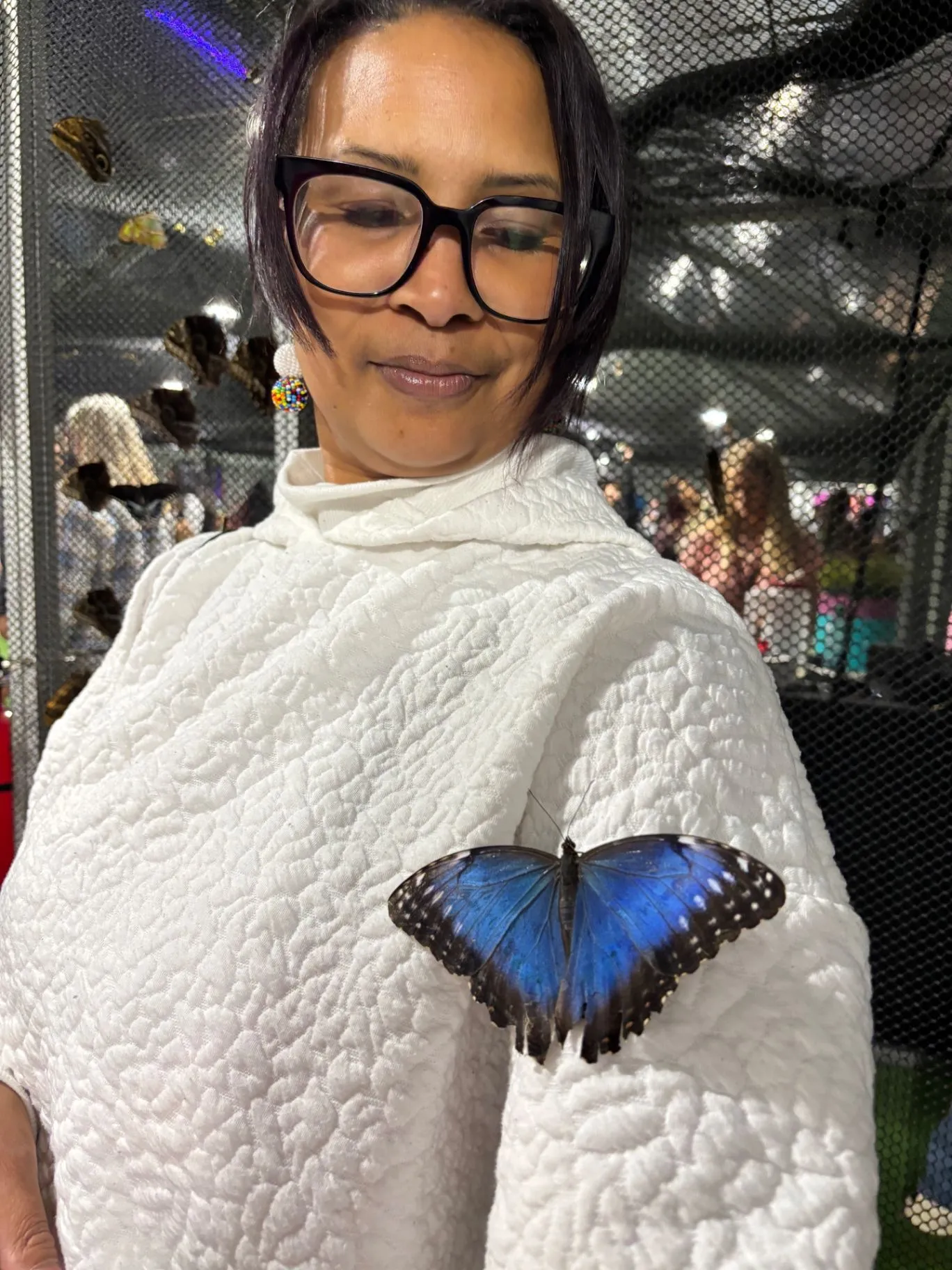
Animal encounters often begin with an ordinary, unplanned moment — the butterfly chose her, not the other way around.
BLOOMING SPIRIT MAGAZINE · FEATURE 10
Animal Spirits, Animal Guides, and the Wisdom We Notice
By Ava Adames
For women moving through transition, renewal, and a deeper season of self-trust
There are times in life when an animal seems to appear at just the right moment: a hawk circling above a crossroads, a fox at the edge of the garden, a deer stepping quietly through the trees. Perhaps the encounter is ordinary. Perhaps it feels meaningful.
Working with animal spirits, or, in more culturally careful language, animal guides, allies, or teachers, can offer a gentle framework for reflection. It may help you ask better questions, listen more closely to your inner life, and notice the natural world as a companion rather than a backdrop.
This practice is not about forcing signs or predicting the future. It is about relationship, attention, and meaning-making.
PAGE 2 · THE INVITATION
“A guide does not need to be dramatic to be meaningful. Sometimes wisdom arrives as a repeated image, a quiet curiosity, or a moment of feeling less alone.”
What do we mean by “animal spirits”?
The phrase animal spirits is used in many different ways. In contemporary spiritual wellness, people may use it to describe an animal whose qualities, presence, or imagery repeatedly support their reflection.
You may also hear the terms animal guide, animal ally, animal teacher, or companion species. These alternatives can be more respectful for people who are not members of a living tradition that uses specific ceremonial language.
Cultural and spiritual traditions
Animals hold profound spiritual roles in many cultures, but those roles are not interchangeable.
In some Indigenous traditions, animals are understood as relatives, persons, teachers, protectors, and spiritually significant beings. The National Museum of the American Indian explains that Native communities have diverse understandings of animal relatives, often rooted in specific histories, relationships, and responsibilities. These teachings should not be reduced to a generalized “spirit animal” concept.
Terms such as totem and spirit animal can refer to distinct community-based systems, including kinship, clan identity, ceremony, and ancestral knowledge. They should not be casually borrowed, commercialized, or blended into a universal practice. A respectful approach is to learn from Indigenous-led sources without claiming membership, authority, or access to closed traditions.
Animal guides also appear in other cultural and religious histories, including European folklore, Norse stories of animal companions, Sámi spiritual history, and various African, Asian, and Oceanic traditions. Each has its own context. Responsible exploration keeps those traditions distinct rather than flattening them into one spiritual category.
Evidence-based and psychological perspectives
From a psychological perspective, animals can function as symbols, dream figures, narrative companions, and projective images. A recurring animal may help you explore qualities such as courage, patience, discernment, playfulness, protection, or rest.
This does not prove that an external spirit is communicating with you. It offers another way to reflect on your emotional landscape.
Mindfulness and meditation may support present-moment awareness, while journaling can help you notice patterns over time. Research summarized by the National Center for Complementary and Integrative Health suggests that mindfulness practices may provide modest support for stress and anxiety for some people, while also noting that meditation is not risk-free and should not replace professional care.
PAGE 3 · HOW TO BEGIN NOTICING
You do not need to choose an animal immediately. Begin with observation.
1. Track what keeps appearing
For two or three weeks, notice animals that arise through:
- Repeated encounters in daily life
- Dreams or remembered dream images
- Books, artwork, songs, or conversations
- Nature walks and seasonal changes
- Oracle or tarot cards
- Personal memories and childhood stories
- Unexpected emotional responses
Write down the date, setting, animal, and your immediate response. If you pull an oracle card alongside your reflection, note the card imagery, the animal shown, and what stirred in you emotionally or somatically. Do not interpret too quickly. Let the pattern develop.
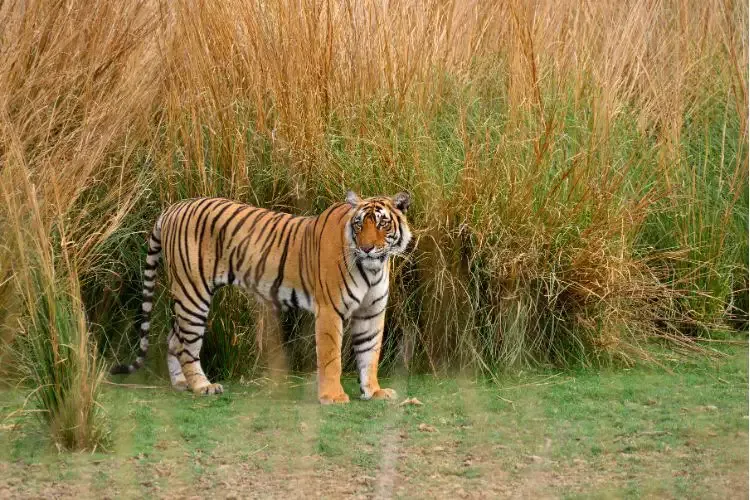
Quietly paying attention to what shows up can be its own practice. Sometimes the image that keeps returning is the one asking you to pause and listen.
2. Ask what your nervous system noticed
A meaningful encounter may bring curiosity, steadiness, tenderness, or a sense of recognition. It may also bring fear or discomfort. Neither response automatically means the animal is a guide.
Try asking:
- What did I feel in my body when I noticed this animal?
- Did I feel more grounded, or more activated?
- What quality does this animal bring to mind for me?
- What might this image be inviting me to consider?
- Am I seeking reassurance, or am I genuinely observing?
- What does my nervous system need right now?
This somatic check-in keeps spiritual exploration connected to the body’s wisdom and present reality.
3. Try a gentle meditation
Settle into a chair with a soft blanket, a cup of tea, and a few quiet minutes. You might place an amethyst or smoky quartz nearby as a tactile anchor, not as a medical treatment, but as a reminder to return to your breath. If you work with oracle cards, you might also pull one before or after meditation and simply notice what quality rises first. An owl card, for example, may carry the message of intuition, inviting you to trust what your body quietly knows before the mind rushes to define it.
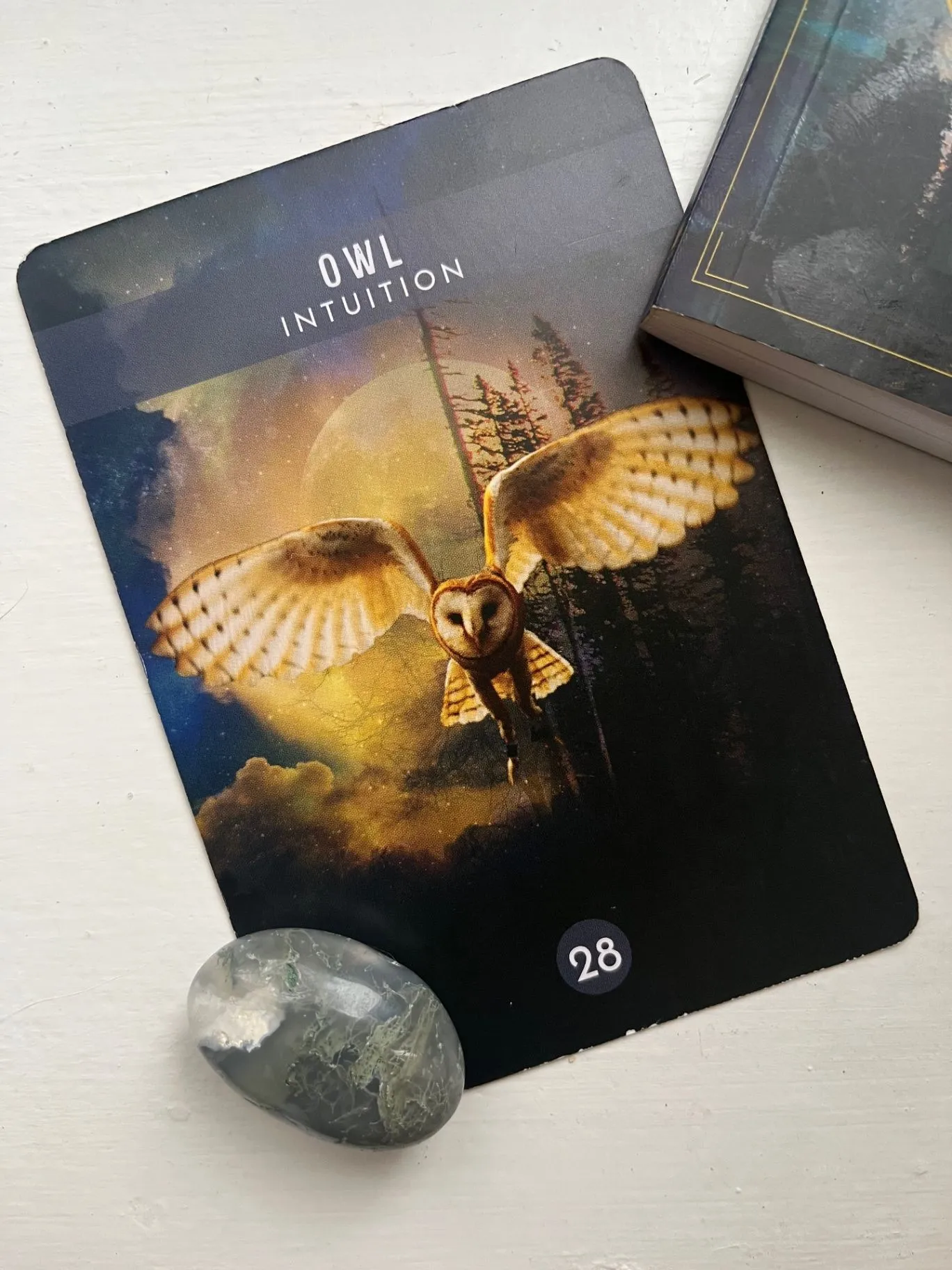
An oracle card can become a gentle mirror. Here, the owl points toward intuition, while the stone beside it offers a steady visual anchor for the practice.
Place both feet on the floor. Breathe naturally. Imagine yourself in a safe natural setting. Rather than calling an animal toward you, simply allow the landscape to unfold. If an animal appears, notice it without demanding a message.
When you are ready, return your attention to the room. Open your eyes. Drink water. Write down what you remember.
PAGE 4 · CONTENTS & DISCLOSURE
In this feature
- What animal spirits and animal guides can mean
- Cultural respect and ethical language
- How to notice recurring animal imagery
- Discernment: guide, symbol, wish, or fear?
- Everyday rituals for working with animal allies
- Grounding, safety, and further reading
Blooming Spirit Magazine Editorial & AI Disclosure
This feature was created with AI-assisted drafting and editorial support. Ava Adames provides the creative direction, research oversight, spiritual framing, and final editorial approval. Cultural and historical material should be approached through the linked sources and, whenever possible, Indigenous-led scholarship and community guidance.
PAGE 5 · DISCERNMENT AND SELF-TRUST
“A supportive symbol tends to widen your perspective. Fear tends to narrow it.”
Spiritual practice becomes steadier when we leave room for uncertainty. A recurring animal may be spiritually meaningful to you, psychologically symbolic, or simply part of the environment you are moving through. It does not have to be only one thing.
A gentle discernment practice
Before assigning a message, ask:
- Does this interpretation encourage compassion and personal responsibility?
- Does it respect the animal’s real behavior and habitat?
- Can I hold this idea lightly rather than treating it as absolute truth?
- Does the experience support calm reflection, or does it increase urgency and fear?
- Am I using this symbolism to avoid a practical decision or conversation?
- Would I feel comfortable discussing this interpretation with a trusted, grounded person?
A genuine-feeling guide does not need to threaten, flatter, command, or isolate you. Be cautious with any interpretation that says you must act immediately, abandon medical care, distrust everyone, or prove your spiritual worth.
Healthy skepticism is not a rejection of spirituality. It is a form of self-trust.
PAGE 6 · EVERYDAY WAYS TO WORK WITH AN ANIMAL GUIDE
Working with an animal guide can be simple, sensory, and quiet.
Create a small remembrance space
Place one meaningful object on a shelf: a nature photograph, a responsibly sourced feather, a stone, a drawing, or a small carved figure that helps you hold the quality you are contemplating. In the Violets in Bloom boutique, a dark green jade horse head carving offers this kind of quiet anchor — an object that can support reflection on movement, strength, and steadiness without needing to over-explain itself. Avoid taking feathers, bones, nests, or other materials from protected areas. When in doubt, choose a found object that can remain where it is, or purchase ethically sourced materials.
Add a candle if safe to do so. Let the space be an invitation, not a shrine that demands constant attention.
Use a journal prompt
Choose one prompt at a time:
- What quality do I associate with this animal, and where is that quality already present in me?
- Where am I being asked to move with more patience?
- What boundary would protect my energy without closing my heart?
- What would this animal’s natural behavior teach me about timing?
- What am I ready to release as this season changes?
Pair the practice with breath or sound
Try three slow exhalations while listening to a gentle singing bowl, soft instrumental music, or the sounds of nature. If breathwork feels uncomfortable, return to ordinary breathing and orient to the room.
For those drawn to energy healing Reiki or sound healing, animal imagery may be included as a personal visualization during a session. It should remain optional and grounded, never presented as a substitute for qualified medical or mental health care. You can learn more about Violets in Bloom’s 1:1 private energy sessions, which may include meditation, breathwork, Reiki, sound healing, and other personalized wellness practices.
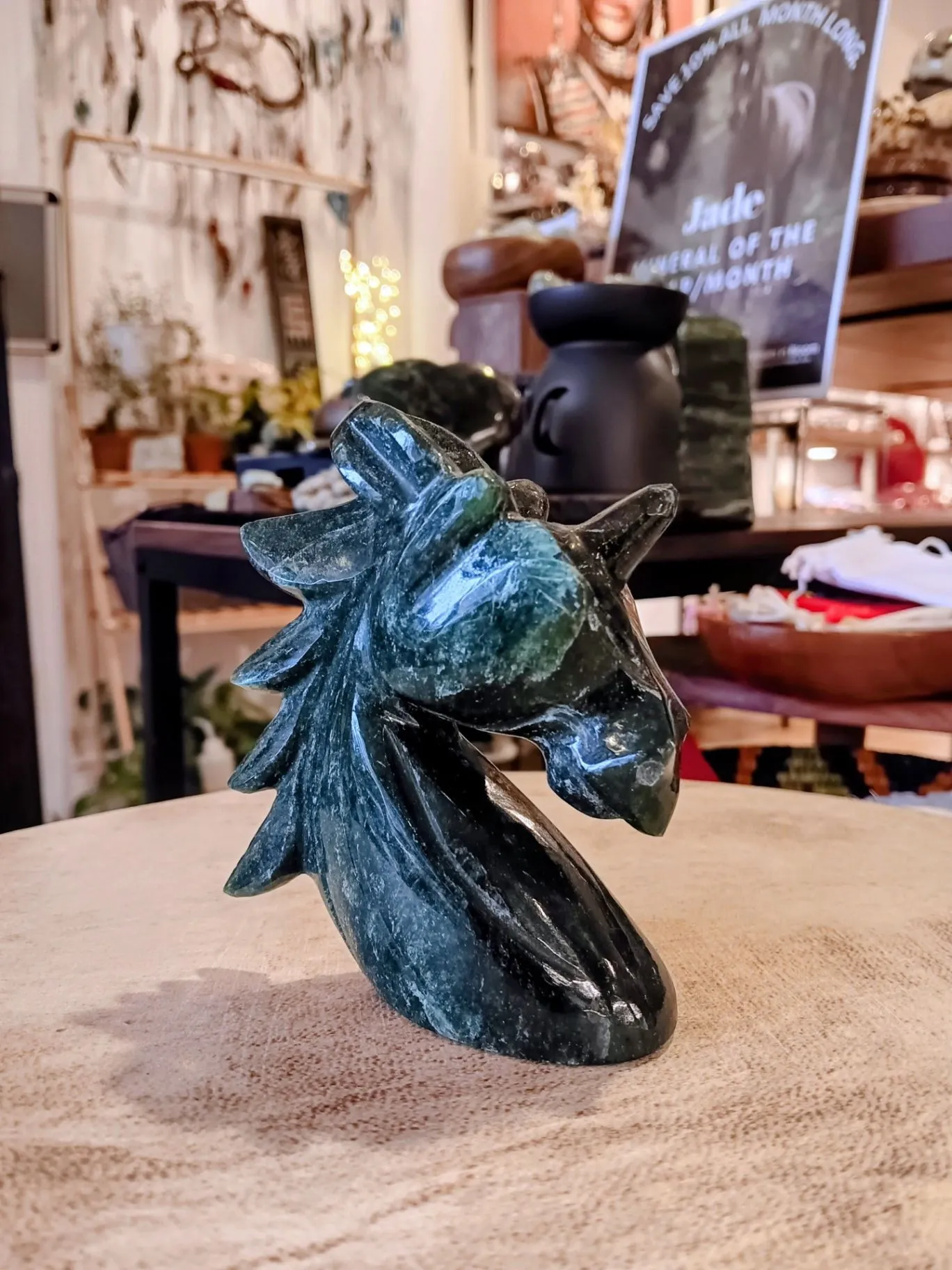
Objects can become everyday anchors for attention. This jade horse head carving, photographed in the Violets in Bloom boutique, holds a grounded, tactile presence for ritual space.
Notice the seasons
Animal behavior changes with weather, migration, food, nesting, and habitat. Let seasonal noticing lead you back to ecology. Learn about the animal rather than assigning it a fixed personality.
A fox is not always “cunning.” An owl is not always “wise.” A deer is not always “gentle.” Real animals are complex, adaptive beings. Respect grows when symbolism does not erase biology.
PAGE 7 · ETHICS, BOUNDARIES, AND CARE
Working with animal guides begins with respect for living animals.
- Do not approach, feed, chase, touch, or photograph wildlife in ways that cause stress.
- Do not force encounters or trespass in search of a sign.
- Do not treat an animal’s suffering as a personal message or spiritual test.
- Avoid fear-based interpretations, omens, and rigid predictions.
- Do not use sacred Indigenous terms, ceremonies, regalia, or teachings without cultural belonging and appropriate guidance.
- Remember that an animal is a living being first, not a tool for personal transformation.
A nature walk can be a beautiful mindfulness practice. Keep your attention soft. Notice the light on leaves, the texture of bark, the movement of wind, and the sounds around you. Sometimes the most healing message is simply that you are here.
A NOTE ON GROUNDING AND SAFETY
Animal-guide work is a spiritual exploration for reflection, creativity, and personal meaning-making. It is not medical or psychological advice, diagnosis, or treatment, and it does not replace therapy, medication, medical care, or crisis support.
If meditation or spiritual exploration brings up distressing, intrusive, frightening, or disorienting experiences, pause the practice and seek support from a qualified mental health professional or health care provider. The NCCIH’s guidance on meditation effectiveness and safety is a helpful starting point for understanding both potential benefits and limitations.
CLOSING INVITATION
You do not need to find a permanent animal guide today. Begin with one walk, one page, one honest question.
Notice what brings you back to yourself. Let curiosity be spacious. Let skepticism keep you steady. Let the natural world remain wild, living, and worthy of respect.
At your own pace, you might choose to:
- Keep a seasonal animal-noticing journal
- Sit for five minutes with a candle and a grounding stone
- Explore a gentle mindfulness meditation
- Share a reflection with someone you trust
What is quietly asking for your attention, and how might you meet it with care?
About the Author
Ava Adames started writing in the fourth grade. Daily stories in her diary. Today she writes blogs, haikus, and short stories with a sprinkling of magic. She is the founder of Violets in Bloom.
By Ava Adames
Sources & Further Reading
- National Museum of the American Indian: Honoring Animal Relatives
- Indigenous Spirituality and Social Work: Animals in Indigenous Spiritualities
- National Center for Complementary and Integrative Health: Meditation and Mindfulness, Effectiveness and Safety
- National Center for Complementary and Integrative Health: Mind and Body Approaches for Stress
- The New York Times Magazine: Art Therapy and Cultural Appropriation
Pull quote
A guide does not need to be dramatic to be meaningful. Sometimes wisdom arrives as a repeated image, a quiet curiosity, or a moment of feeling less alone.